Can You Combine and Shorten Prayers During Umrah? Here Is the Explanation
Can you combine and shorten prayers during umrah? Learn the time limit for shortening in Makkah, praying behind the Masjid al-Haram imam, and practical tips.
Issued , by Admin Tridaya. 9 min read.
Contents
- 1. What Are Jamak and Qashar?
- 2. The Evidence for Shortening Prayers While Traveling
- 3. How Long May Umrah Pilgrims Shorten Prayers in Makkah and Madinah?
- 4. What If You Pray Behind the Imam of Masjid al-Haram?
- 5. May You Combine Prayers While Traveling for Umrah?
- 6. What About Jamak and Qashar Once You Are at Your Hotel in Makkah or Madinah?
- 7. Tips on Jamak and Qashar During Umrah
- Frequently Asked Questions About Jamak and Qashar During Umrah
- Conclusion: Jamak and Qashar During Umrah
- Worship with Peace of Mind Alongside Tridaya’s Guides
- Sources
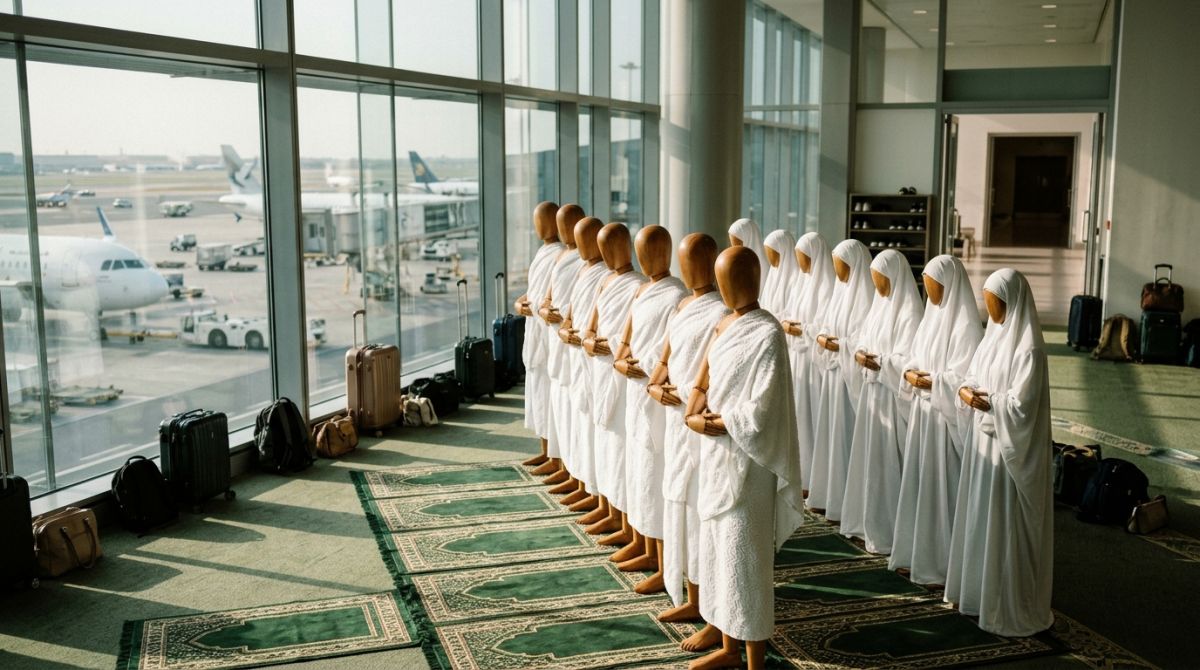
During an umrah trip, you will travel a long way from Indonesia and then stay several days in Makkah and Madinah. This is why many pilgrims ask: can you combine and shorten prayers during umrah?
Some pilgrims assume they may keep shortening their prayers throughout their stay in the Holy Land because they are travelers. In fact, scholars give a detailed answer: when pilgrims may still shorten, when they must pray in full, and what to do when praying behind the imam of Masjid al-Haram.
This article summarizes the explanations of Ustadz Ammi Nur Baits at KonsultasiSyariah.com and Ustadz Muhammad Abduh Tuasikal at Rumaysho.com, complete with evidence and practical tips for umrah pilgrims.
1. What Are Jamak and Qashar?
Qashar means shortening a four-rakaat prayer to two rakaat. This concession applies only to Zuhr, Asr, and Isha. Fajr and Maghrib cannot be shortened.
Jamak means combining two prayers in one prayer time. There are only two pairs: Zuhr with Asr, and Maghrib with Isha. Combining them in the time of the first prayer is called jamak taqdim, and combining them in the time of the second prayer is called jamak ta’khir.
Jamak and qashar are two different concessions. Qashar is tied to travel, while jamak is allowed when there is a reason that makes it hard to pray on time, and travel is one such reason.
2. The Evidence for Shortening Prayers While Traveling
Allah Ta’ala says:
وَإِذَا ضَرَبْتُمْ فِي الْأَرْضِ فَلَيْسَ عَلَيْكُمْ جُنَاحٌ أَنْ تَقْصُرُوا مِنَ الصَّلَاةِ
Meaning: “And when you travel throughout the land, there is no blame upon you for shortening the prayer.” (QS. An-Nisa: 101)
Ibn Umar radhiyallahu ‘anhuma said that he accompanied the Messenger of Allah shallallahu ‘alaihi wa sallam on journeys, and the Prophet never prayed more than two rakaat until he passed away (HR. Muslim no. 1611 and Abu Dawud no. 1225).
Ibn Abbas radhiyallahu ‘anhuma also explained that Allah made the prayer four rakaat for residents, two rakaat for travelers, and one rakaat in a state of fear (HR. Muslim).
3. How Long May Umrah Pilgrims Shorten Prayers in Makkah and Madinah?
This is the most frequently asked question. While traveling from Indonesia to the Holy Land, you are clearly a traveler and may shorten your prayers. The question is what happens after you arrive and stay several days in Makkah or Madinah.
Scholars differ on the time limit. Ustadz Muhammad Abduh Tuasikal at Rumaysho.com explains that the deciding factor is your intended length of stay:
- If from the start you intend to stay four full days or more (not counting the day of arrival and the day of departure), you are considered a resident (mukim). You pray all four rakaat from the first day, without waiting for the fourth day.
- If you intend to stay less than four days, you remain a traveler and may shorten your prayers.
This is the view of Imam Ash-Shafi’i and the majority of scholars, as reported by Imam An-Nawawi in Sharh Sahih Muslim. It is based on the hadith of Anas bin Malik radhiyallahu ‘anhu about the Farewell Hajj. He said that the Messenger of Allah shallallahu ‘alaihi wa sallam prayed two rakaat at a time from the moment they left Madinah for Makkah until they returned to Madinah (HR. Bukhari no. 1081 and Muslim no. 693).
Imam An-Nawawi explained that during the Farewell Hajj, the Prophet arrived in Makkah on 4 Dhul Hijjah and left for Mina on 8 Dhul Hijjah. In other words, he stayed in Makkah less than four full days, not counting the days of arrival and departure.
As for the narration of Ibn Abbas that the Prophet shortened his prayers for 19 days in Makkah (HR. Bukhari no. 1080), this happened during the Conquest of Makkah. At that time he did not intend to settle and did not know when his affairs would be finished. Imam At-Tirmidhi reported that scholars agree a traveler may keep shortening as long as he has not decided to settle, even if the stay is long.
In an umrah package, the length of stay in Makkah and Madinah is usually fixed from the start, generally four days or more in each city. Therefore, according to the majority view, pilgrims pray in full while in Makkah and Madinah. You can read more about the length of an umrah trip in our article how many days umrah takes.
4. What If You Pray Behind the Imam of Masjid al-Haram?
The imams of Masjid al-Haram and the Prophet’s Mosque are local residents who pray four rakaat. Ustadz Ammi Nur Baits at KonsultasiSyariah.com explains that a traveler who prays behind a resident imam may not shorten the prayer. He must pray four rakaat, following the imam.
The evidence is the story of Musa bin Salamah. He asked Ibn Abbas in Makkah: “When we pray with you, we pray four rakaat. When we return to our camp, we pray two rakaat.” Ibn Abbas replied:
تِلْكَ سُنَّةُ أَبِي الْقَاسِمِ صَلَّى اللهُ عَلَيْهِ وَسَلَّمَ
Meaning: “That is the Sunnah of Abul Qasim (Prophet Muhammad) shallallahu ‘alaihi wa sallam.” (HR. Ahmad no. 1862, graded hasan by Shaykh Shu’aib Al-Arna’ut)
This rule applies even if you join late. Shaykh Mashhur Hasan Salman explained that if you catch two rakaat with the imam, add two more. If you catch three, add one. If you only catch the final tashahhud, you still pray a full four rakaat.
So even though you are still a traveler, when you join the congregational prayer at Masjid al-Haram or the Prophet’s Mosque, you pray four rakaat like the imam. On top of that, you gain the multiplied reward of praying in Masjid al-Haram.
5. May You Combine Prayers While Traveling for Umrah?
Yes. The Messenger of Allah shallallahu ‘alaihi wa sallam combined prayers when traveling. Anas bin Malik radhiyallahu ‘anhu said that if the Prophet set out before the sun passed its zenith, he delayed Zuhr until the time of Asr and then combined the two. If the sun had already passed its zenith before he set out, he prayed Zuhr first and then departed (HR. Bukhari no. 1111, 1112 and Muslim no. 704).
Mu’adh bin Jabal radhiyallahu ‘anhu also narrated that during the Tabuk expedition, the Prophet combined Zuhr with Asr and Maghrib with Isha (HR. Muslim no. 706).
Guidance for umrah pilgrims:
- Departing before the first prayer time begins, for example a flight that takes off before Zuhr: jamak ta’khir is better, praying Zuhr and Asr together in the time of Asr.
- Departing after the first prayer time has begun: jamak taqdim is better, praying Zuhr and then Asr in the time of Zuhr before you leave.
- Jamak taqdim: start with the first prayer, make the intention to combine before the first prayer ends, and leave no long gap between the two.
- Jamak ta’khir: make the intention to delay the first prayer while its time is still running. Delaying a prayer without the intention to combine is a sin, and the prayer must be made up.
These rules are explained by Ustadz Muhammad Abduh Tuasikal at Rumaysho.com, citing Minhah Al-’Allam by Shaykh Abdullah Al-Fauzan (3/478–485).
6. What About Jamak and Qashar Once You Are at Your Hotel in Makkah or Madinah?
As a rule, every prayer is performed in its own time. Combining is allowed only when there is a reason that makes it hard to pray on time, such as traveling.
Once you are at a hotel near Masjid al-Haram or the Prophet’s Mosque, you hear the call to prayer at every prayer time and the mosque is within reach. The best choice is therefore to pray on time in congregation at the mosque, four rakaat behind the imam.
If you pray at your hotel, consider your status. If your stay in that city is four days or more, according to the majority of scholars you pray in full. We have covered praying in congregation at a hotel, and following the Masjid al-Haram imam from there, in our article on praying at a hotel in Makkah.
7. Tips on Jamak and Qashar During Umrah
- Check your flight schedule before departure, then decide whether you need jamak taqdim at the airport or jamak ta’khir after landing.
- Use qashar while traveling, whether at the airport, on the plane, or on intercity buses such as the Makkah–Madinah journey.
- Follow the imam’s four rakaat every time you pray in congregation at Masjid al-Haram or the Prophet’s Mosque, even if you join late.
- Know how long you will stay in Makkah and Madinah from your package itinerary, because it determines whether you are still a traveler or already a resident.
- Ask your religious guide if you are unsure, especially when the schedule changes because of a flight delay.
Frequently Asked Questions About Jamak and Qashar During Umrah
May umrah pilgrims shorten their prayers? Yes, while traveling. After arriving in Makkah or Madinah, if you intend to stay four days or more, the majority of scholars hold that you pray in full.
May you shorten the prayer behind the imam of Masjid al-Haram? No. A traveler praying behind a resident imam must pray four rakaat, following the imam.
What if I join late and only catch the final tashahhud? You still complete the prayer to four rakaat.
Which prayers may be combined? Zuhr with Asr, and Maghrib with Isha. Fajr may not be combined.
Must combining always be done together with shortening? No. Jamak and qashar are two separate concessions and can be done independently.
Conclusion: Jamak and Qashar During Umrah
Umrah pilgrims may combine and shorten their prayers while traveling, for example from Indonesia to the Holy Land or from Makkah to Madinah. Choose jamak taqdim or jamak ta’khir according to your departure time.
After arriving, according to the majority of scholars, pilgrims who intend to stay four days or more in Makkah or Madinah are considered residents and pray in full. Every time you pray behind the imam of Masjid al-Haram or the Prophet’s Mosque, you pray four rakaat following the imam.
Best of all is to keep praying on time in congregation at the mosque throughout your stay in the Holy Land.
Worship with Peace of Mind Alongside Tridaya’s Guides
Tridaya Travel has served umrah and hajj pilgrims since 2002. Our religious guides accompany pilgrims from departure, including explaining when to combine and shorten prayers along the journey.
See the Tridaya umrah packages and plan your worship with our team.
Sources
- Ketika Musafir yang Bermakmum di Belakang Mukim, Ustadz Ammi Nur Baits, KonsultasiSyariah.com, 20 March 2019 (in Indonesian).
- Tentang Jamak Qashar Shalat, Konsultasi Syariah Team, KonsultasiSyariah.com, 14 March 2011 (in Indonesian).
- Berapa Lama Safar yang Membolehkan Mengqashar Shalat?, Ustadz Muhammad Abduh Tuasikal, Rumaysho.com, 13 September 2024 (in Indonesian).
- Panduan Shalat Jamak bagi Musafir, Ustadz Muhammad Abduh Tuasikal, Rumaysho.com, 28 October 2024 (in Indonesian).
- Cara Musafir Berjamaah di Belakang Imam Mukim, Ustadz Muhammad Abduh Tuasikal, Rumaysho.com (in Indonesian).
Share this article
WhatsApp