Raudhah in Masjid Nabawi: Is It Truly a Garden of Paradise, and Is There a Special Dua?
A guide to the Raudhah in Masjid Nabawi: the evidence that it is a garden of Paradise, the virtue of praying there, whether there is a special dua, etiquette, and entry via Nusuk.
Issued , by Admin Tridaya. 8 min read.
Contents
- 1. Where Is the Raudhah in Masjid Nabawi?
- 2. The Evidence That the Raudhah Is a Garden of Paradise
- 3. What Does “Garden of Paradise” Mean?
- 4. Is Praying in the Raudhah of Masjid Nabawi More Virtuous?
- 5. Is There a Special Dua in the Raudhah?
- 6. May You Pray in the Raudhah During the Forbidden Times?
- 7. Etiquette in the Raudhah and Masjid Nabawi
- 8. How to Enter the Raudhah of Masjid Nabawi with a Nusuk Permit
- Tips for Visiting the Raudhah
- Frequently Asked Questions About the Raudhah in Masjid Nabawi
- Conclusion: Gaining the Virtue of the Raudhah in Masjid Nabawi
- A More Peaceful Madinah Visit with Tridaya
- Sources
For many pilgrims, praying in the Raudhah of Masjid Nabawi is one of the most awaited moments in Madinah. The Messenger of Allah shallallahu ‘alaihi wa sallam described this small green-carpeted area as one of the gardens of Paradise.
Because of its virtue, the Raudhah is almost always crowded with pilgrims from around the world, and entry now requires a permit. Many questions arise as well: what does “garden of Paradise” mean, is praying there better than elsewhere in the mosque, is there a special dua, and what is the etiquette?
This article summarizes the explanations of Ustadz Ammi Nur Baits at KonsultasiSyariah.com, Ustadz Muhammad Abduh Tuasikal at Rumaysho.com, Ustadz Yulian Purnama at Muslim.or.id, and the book Al-Wajiz published at Almanhaj.or.id, complete with evidence and practical tips.
1. Where Is the Raudhah in Masjid Nabawi?
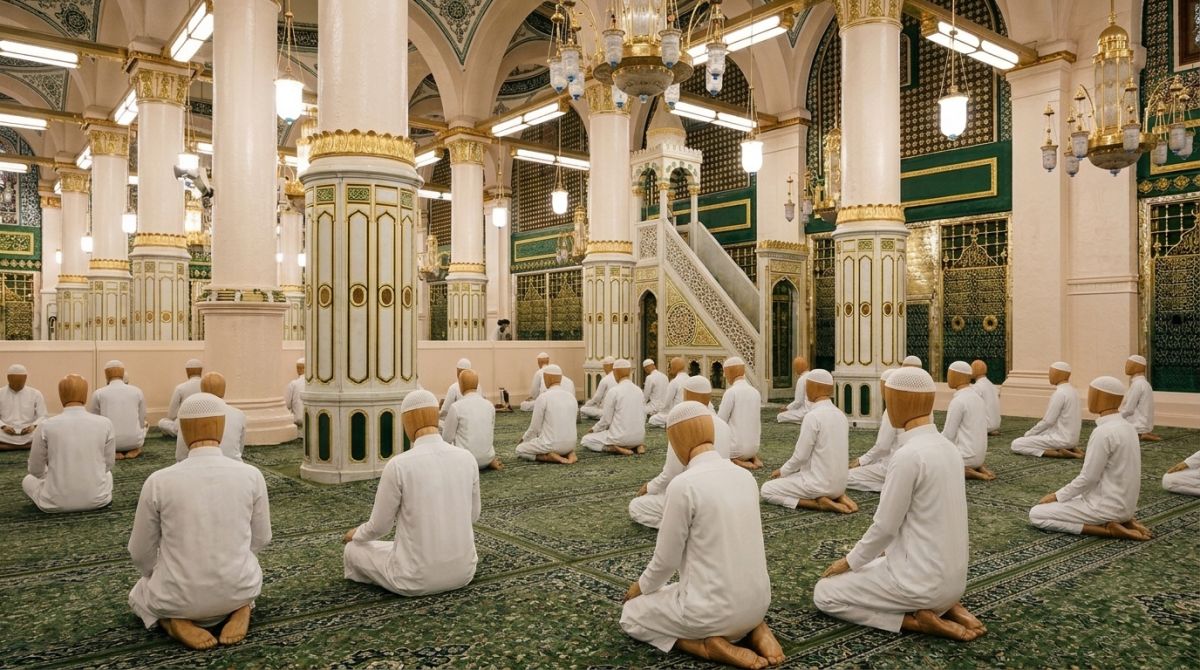
The Raudhah is the area inside Masjid Nabawi between the house of the Messenger of Allah shallallahu ‘alaihi wa sallam, which is now the site of his grave, and his minbar. It is marked by white pillars and a green carpet, different from the red carpet in the rest of the mosque.
In this area the Prophet led the prayers, delivered sermons, and taught the religion to his Companions. That is why the place holds a special status.
2. The Evidence That the Raudhah Is a Garden of Paradise
Abdullah bin Zaid Al-Mazini radhiyallahu ‘anhu reported that the Messenger of Allah shallallahu ‘alaihi wa sallam said:
مَا بَيْنَ بَيْتِي وَمِنْبَرِي رَوْضَةٌ مِنْ رِيَاضِ الْجَنَّةِ
Meaning: “What is between my house and my minbar is one of the gardens of Paradise.” (HR. Bukhari no. 1195 and Muslim no. 1390)
In the narration of Abu Hurairah radhiyallahu ‘anhu there is an addition: “and my minbar is over my Pond” (HR. Bukhari no. 1196 and Muslim no. 1391).
3. What Does “Garden of Paradise” Mean?
Ustadz Ammi Nur Baits at KonsultasiSyariah.com explains that scholars have three interpretations:
- The place will be moved to Paradise, so it will truly become part of Paradise in the Hereafter.
- Worship in that place leads to Paradise, just as Paradise is attained through righteous deeds.
- A figurative expression for the place where revelation came down and where the Prophet held his circles of knowledge. Ibn Hajar in Fath Al-Bari considered this meaning the closest to the truth.
This third meaning fits another hadith in which the Prophet called gatherings of dhikr and knowledge “the gardens of Paradise” (HR. At-Tirmidhi and Ahmad, graded hasan by some scholars). So Ustadz Ammi concludes that the virtue of the Raudhah is not limited to praying in it.
4. Is Praying in the Raudhah of Masjid Nabawi More Virtuous?
Praying in Masjid Nabawi in general carries great virtue. The Messenger of Allah shallallahu ‘alaihi wa sallam said:
صَلَاةٌ فِي مَسْجِدِي هَذَا أَفْضَلُ مِنْ أَلْفِ صَلَاةٍ فِيمَا سِوَاهُ إِلَّا الْمَسْجِدَ الْحَرَامَ
Meaning: “A prayer in this mosque of mine is better than a thousand prayers in any other mosque, except Masjid al-Haram.” (HR. Bukhari no. 1190 and Muslim no. 1394)
This thousandfold reward applies to the whole of Masjid Nabawi, not only the Raudhah. Shaykh Muhammad bin Salih Al-Uthaymin, as quoted by Ustadz Muhammad Abduh Tuasikal at Rumaysho.com, explains that all parts of the mosque are equal in this multiplied reward.
Even so, Shaykh Salih Al-Munajjid explains that it is prescribed for visitors to pray two rakaat or other voluntary prayers in the Raudhah because of its virtue. The Companion Salamah bin Al-Akwa’ radhiyallahu ‘anhu was also known to deliberately pray near one of the pillars in this area, following the Prophet (HR. Bukhari no. 502 and Muslim no. 509).
Remember that for obligatory prayers, the first row is still more virtuous. Do not let the rush for the Raudhah cost you the front row. You can also read about the virtue of praying in the two holy mosques in our article on the reward of praying in Masjid al-Haram.
5. Is There a Special Dua in the Raudhah?
There is no special dua taught by the Messenger of Allah to be recited in the Raudhah. In the sources we refer to, the acts mentioned are voluntary prayer, dhikr, reciting the Quran, and making dua in general.
So you are free to make dua in any language for good in this world and the Hereafter, for your family, and for the Muslims. Be wary of sheets or booklets of “special Raudhah prayers” that come without evidence.
6. May You Pray in the Raudhah During the Forbidden Times?
Raudhah entry times sometimes fall after Fajr or after Asr. Ustadz Ammi Nur Baits at KonsultasiSyariah.com explains that the Raudhah has the same ruling as the rest of the mosque. The prohibition of voluntary prayers without a reason during the forbidden times still applies, based on the hadith of Abu Sa’id Al-Khudri radhiyallahu ‘anhu (HR. Bukhari no. 586).
In detail:
- If you have just entered the mosque and have not prayed: you may pray two rakaat of tahiyyat al-masjid in the Raudhah, because this prayer has a reason. The Shafi’i school allows prayers that have a reason during the forbidden times.
- If you have already prayed in the mosque: it is better not to add voluntary prayers, and simply sit making dhikr, reciting the Quran, and making dua.
7. Etiquette in the Raudhah and Masjid Nabawi
- Do not push or hurt other pilgrims to get a spot. Ustadz Muhammad Abduh Tuasikal reminds that seeking virtue must not involve wronging others, especially the weak and the elderly.
- Do not wipe the minbar, the pillars, or the walls of the grave to seek blessing. Ustadz Yulian Purnama at Muslim.or.id explains that this is not part of the Sunnah.
- Do not face the grave when making dua. Keep facing the qiblah.
- Send greetings of peace to the Messenger of Allah, then to Abu Bakr and Umar radhiyallahu ‘anhuma, in a low voice and with good manners.
- Mind the time. Visits are limited so that other pilgrims get a turn, so make the most of your time and leave when officers ask you to.
8. How to Enter the Raudhah of Masjid Nabawi with a Nusuk Permit
Entering the Raudhah now requires a permit (tasreh) booked through the official Nusuk app. Based on reports by detikInet and NU Online, the general steps are:
- Download the Nusuk app from an official app store, then register as a visitor with your passport and visa details.
- Choose the Raudhah option for your gender, because the schedules for men and women are separate.
- Choose an available date and time for your visit.
- Show your permit to the officers at the Raudhah entrance at the scheduled time.
Quota and schedule rules can change at any time. Group pilgrims are usually registered collectively by their guide. Be wary of offers to enter the Raudhah through unofficial links or brokers, because permits are only issued through Nusuk.
Tips for Visiting the Raudhah
- Book your permit early as soon as you arrive in Madinah, or confirm the group schedule with your guide right away.
- Arrive early at the queue point for the time on your permit, and keep your phone fully charged.
- Prepare a list of duas before entering so the short time is not wasted.
- Put elderly pilgrims first in your group, and stay together so no one gets separated.
- Bring only a small bag, because the Raudhah area is very crowded.
You can read about how long pilgrims usually stay in Madinah during umrah in our article on how many days umrah takes.
Frequently Asked Questions About the Raudhah in Masjid Nabawi
Is the Raudhah truly a garden of Paradise? Yes, based on a sahih hadith narrated by Bukhari and Muslim. Scholars differ on what “garden of Paradise” means.
Is the reward for praying in the Raudhah greater than elsewhere in the mosque? The thousandfold reward applies to all of Masjid Nabawi. However, voluntary prayer in the Raudhah is still recommended because of the virtue of the place.
Is there a special dua in the Raudhah? No. You are free to make dua in any language.
May you pray in the Raudhah after Fajr or Asr? You may pray tahiyyat al-masjid if you have just entered the mosque. If you have already prayed, simply make dhikr and dua.
May women enter the Raudhah? Yes, at times separate from men, booked through Nusuk.
Conclusion: Gaining the Virtue of the Raudhah in Masjid Nabawi
The Raudhah is the area between the house and the minbar of the Messenger of Allah, described as one of the gardens of Paradise. Voluntary prayer, dhikr, and dua there are recommended, although the thousandfold reward applies to all of Masjid Nabawi and no special dua was taught.
Keep good manners while inside: do not crowd others to the point of hurting them, do not wipe the minbar or walls, and keep facing the qiblah when making dua.
A More Peaceful Madinah Visit with Tridaya
Tridaya Travel has served umrah and hajj pilgrims since 2002. Our religious guides help pilgrims arrange their Raudhah schedule and accompany them in Masjid Nabawi, so their worship stays focused and orderly.
See the Tridaya umrah packages and plan your worship with our team.
Sources
- Ada Apa di Raudhah?, Ustadz Ammi Nur Baits, KonsultasiSyariah.com, 30 December 2017 (in Indonesian).
- Shalat di Raudhah di Waktu Terlarang, Ustadz Ammi Nur Baits, KonsultasiSyariah.com, 7 April 2017 (in Indonesian).
- Shalat di Roudhoh Masjid Nabawi, Ustadz Muhammad Abduh Tuasikal, Rumaysho.com, 7 July 2011 (in Indonesian).
- Keutamaan Shalat dan Beribadah di Raudhah, Ustadz Yulian Purnama, Muslim.or.id, 7 September 2015 (in Indonesian).
- Menziarahi Kota Madinah Al-Munawwarah, Shaykh Abdul Azhim bin Badawi Al-Khalafi, Almanhaj.or.id (in Indonesian).
- Tips Singkat Mengunjungi Raudhah di Masjid Nabawi bagi Jamaah Haji Indonesia, NU Online, 24 April 2026 (in Indonesian).
Share this article
WhatsApp