Sunnah Acts of Tawaf in Umrah: What Are Idtiba’ and Raml, and What If You Can’t Kiss the Black Stone?
The sunnah acts of tawaf in umrah as taught by the Prophet: idtiba’, raml in the first three rounds, kissing or pointing to the Black Stone, and touching the Yemeni Corner.
Issued , by Admin Tridaya. 7 min read.
Contents
- 1. Idtiba’: Uncovering the Right Shoulder During Tawaf
- 2. Raml: Walking Briskly in the First Three Rounds
- 3. Sunnah Acts of Tawaf at the Black Stone
- 4. What If You Cannot Kiss the Black Stone?
- 5. Touching the Yemeni Corner, Not the Other Corners
- 6. Supplicating Between the Two Corners and Remembering Allah Quietly
- Tips for Practicing the Sunnah Acts of Tawaf in the Crowd
- Frequently Asked Questions About the Sunnah Acts of Tawaf
- Conclusion: The Sunnah Acts Complete Your Tawaf
- Perform Tawaf According to the Sunnah with Tridaya’s Guides
- Sources
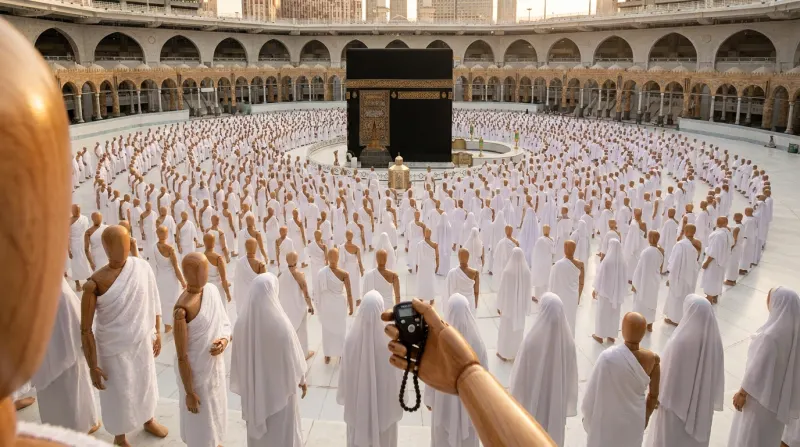
Besides the conditions that must be met, there are several sunnah acts of tawaf that the Prophet, peace be upon him, practiced. They include uncovering the right shoulder, walking briskly in the first three rounds, kissing the Black Stone, and touching the Yemeni Corner.
Unfortunately, many pilgrims are not yet familiar with the terms idtiba’ and raml. Others push through the crowd just to kiss the Black Stone, even though there are other ways that also follow the sunnah. What is the correct guidance?
This article summarizes the explanations of Ustadz Muhammad Abduh Tuasikal at Muslim.or.id and Rumaysho.com, which refer to Al-Mawsu’ah Al-Fiqhiyyah (29/134–140) and a commentary on Bulugh al-Maram.
1. Idtiba’: Uncovering the Right Shoulder During Tawaf
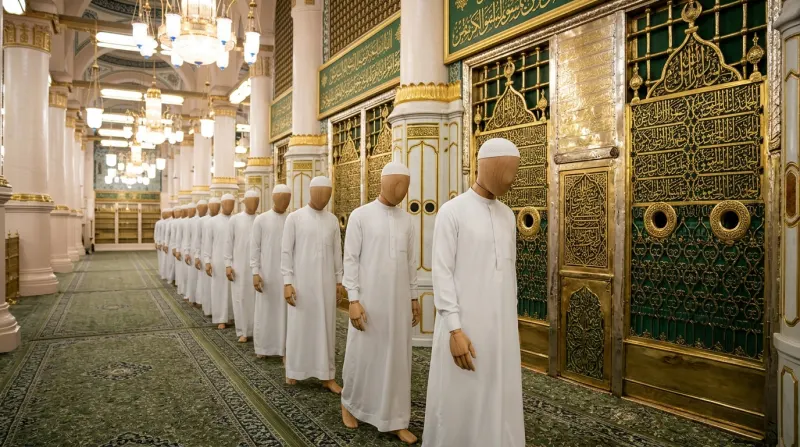
Idtiba’ means placing the middle of the upper ihram cloth (rida’) under the right armpit and throwing both ends over the left shoulder. This leaves the right shoulder uncovered and the left shoulder covered.
The evidence is the hadith of Ya’la bin Umayyah radhiyallahu ‘anhu:
أَنَّ النَّبِيَّ صَلَّى اللَّهُ عَلَيْهِ وَسَلَّمَ طَافَ مُضْطَبِعًا
Meaning: “The Prophet, peace be upon him, performed tawaf in the state of idtiba’.” (HR. Ibn Majah no. 2954, graded hasan by Shaykh Al-Albani)
Idtiba’ is only for men and is done in all rounds of the umrah tawaf. Once tawaf is finished, the right shoulder is covered again. Hanafi and Shafi’i scholars consider it disliked to pray with the right shoulder still uncovered, including during the two rakaat after tawaf.
2. Raml: Walking Briskly in the First Three Rounds
Raml means walking briskly with short steps while moving the shoulders, without jumping. It is done in the first three rounds, and the remaining four are walked normally. Jabir radhiyallahu ‘anhu narrated:
فَرَمَلَ ثَلاَثًا وَمَشَى أَرْبَعًا
Meaning: “He walked briskly for three rounds and walked normally for four.” (HR. Muslim no. 1218)
This sunnah began in the Umrah al-Qada in the 7th year after Hijrah. The Prophet told the companions to do raml so the polytheists of Makkah would see the strength of the Muslims (HR. Bukhari no. 1602 and Muslim no. 1266). You can read about this umrah in our article on what Umrah al-Qada is. During the Farewell Hajj, the Prophet did raml again, so this sunnah remains in force today.
Ustadz Muhammad Abduh Tuasikal explains several rules of raml:
- Only for men. Women do not do raml or idtiba’.
- It is sunnah in a tawaf followed by sa’i, such as the umrah tawaf, not in the farewell tawaf.
- It is not made up in later rounds. If you miss it in the first three rounds, you do not make it up in the remaining four.
- There is no penalty for leaving it.
- When it is crowded, you may move further from the Kaaba to do raml. But if it is too packed or you fear bumping into women pilgrims, simply walk normally near the Kaaba.
3. Sunnah Acts of Tawaf at the Black Stone
Tawaf begins at the Black Stone, facing it and saying takbir. Ibn Abbas radhiyallahu ‘anhuma narrated that the Prophet performed tawaf on his camel. Each time he reached the corner of the Black Stone, he pointed to it and said takbir (HR. Bukhari no. 1612).
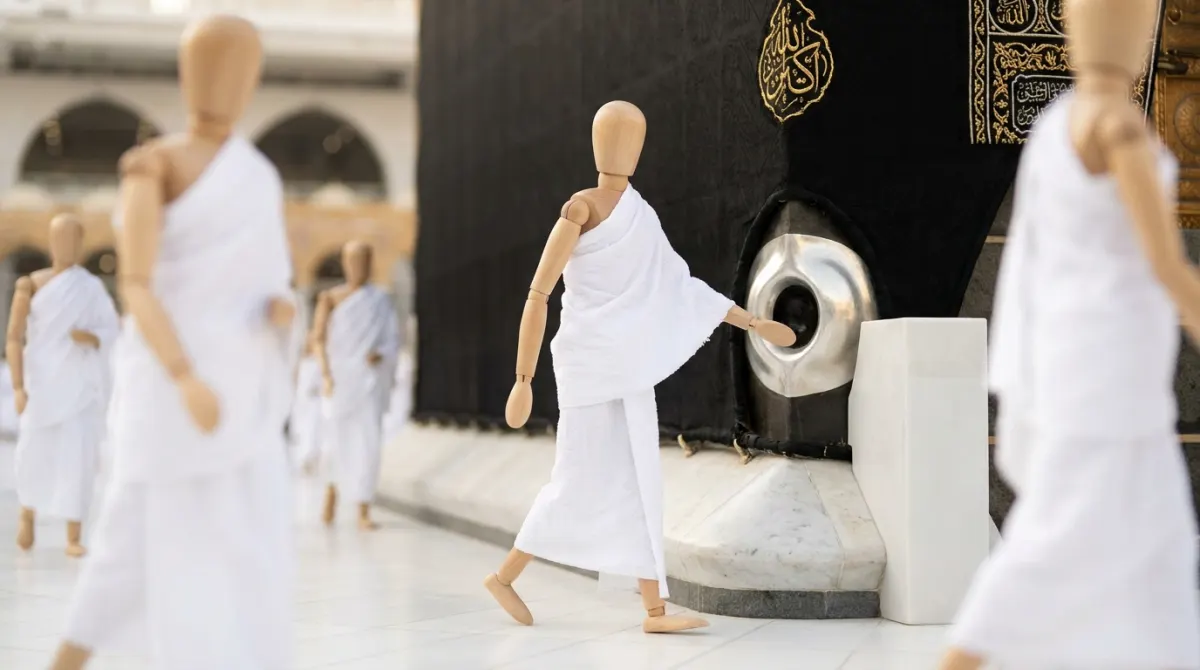
The best-known sunnah act of tawaf is kissing the Black Stone. Most scholars recommend it at the start of tawaf and in every round. However, kissing the Black Stone is purely following the Prophet, not because the stone has any power. Umar bin Khattab radhiyallahu ‘anhu said when kissing it:
إِنِّى أَعْلَمُ أَنَّكَ حَجَرٌ لاَ تَضُرُّ وَلاَ تَنْفَعُ، وَلَوْلاَ أَنِّى رَأَيْتُ النَّبِىَّ صَلَّى اللَّهُ عَلَيْهِ وَسَلَّمَ يُقَبِّلُكَ مَا قَبَّلْتُكَ
Meaning: “I know that you are only a stone that can neither harm nor benefit. Had I not seen the Prophet, peace be upon him, kiss you, I would not have kissed you.” (HR. Bukhari no. 1597 and Muslim no. 1270)
You can read about the history and virtues of this stone in our article a closer look at the Black Stone.
4. What If You Cannot Kiss the Black Stone?
In busy seasons, it is almost impossible to reach the Black Stone without pushing. Rumaysho.com explains the levels you can follow:
- Kiss the Black Stone if possible.
- Touch it with your hand and kiss your hand, if you cannot kiss it directly.
- Point to it with your hand from a distance while saying takbir, if you cannot touch it.
The most important thing is not to harm others. Kissing the Black Stone is sunnah, while harming a fellow Muslim is forbidden. Ustadz Muhammad Abduh Tuasikal also explains that women are not encouraged to kiss the Black Stone when it is crowded, only when it is quiet, as it could endanger themselves and the men around them.
5. Touching the Yemeni Corner, Not the Other Corners
The Yemeni Corner is the corner of the Kaaba just before the Black Stone. It is touched with the hand, but not kissed, and you do not point to it from a distance if you cannot touch it. Ibn Umar radhiyallahu ‘anhuma said:
لَمْ أَرَ النَّبِيَّ صَلَّى اللَّهُ عَلَيْهِ وَسَلَّمَ يَسْتَلِمُ مِنَ الْبَيْتِ إِلاَّ الرُّكْنَيْنِ الْيَمَانِيَيْنِ
Meaning: “I never saw the Prophet, peace be upon him, touch any part of the House except the two Yemeni corners.” (HR. Bukhari no. 1609 and Muslim no. 1267)
The two Yemeni corners are the Yemeni Corner and the corner of the Black Stone. The other two corners, the Syrian and Iraqi corners, are not touched. Rumaysho.com, quoting Ibn Taymiyyah and Ibn al-Qayyim, also explains that there is no need to wipe the walls and pillars of the Kaaba.
6. Supplicating Between the Two Corners and Remembering Allah Quietly
Between the Yemeni Corner and the Black Stone, the Prophet recited:
رَبَّنَا آتِنَا فِى الدُّنْيَا حَسَنَةً وَفِى الآخِرَةِ حَسَنَةً وَقِنَا عَذَابَ النَّارِ
Meaning: “Our Lord, give us good in this world and good in the Hereafter, and protect us from the punishment of the Fire.” (HR. Abu Dawud no. 1892, authenticated by Shaykh Al-Albani)
Beyond that, pilgrims are free to remember Allah, make du’a, or recite the Qur’an quietly so as not to disturb others. You can read more in our article on du’a during tawaf.
Tips for Practicing the Sunnah Acts of Tawaf in the Crowd
- Arrange your ihram cloth before entering the mataf, so idtiba’ is ready from the first round.
- Do not force raml if it endangers elderly pilgrims, children, or women around you.
- Simply point to the Black Stone when it is crowded. You are still following the sunnah.
- Stay with your group and follow your guide, especially near the Kaaba.
- Cover your right shoulder again after the seventh round, before praying two rakaat.
Before attending to the sunnah acts, make sure the conditions of a valid tawaf are met. You can read more in our article on the conditions of tawaf in umrah.
Frequently Asked Questions About the Sunnah Acts of Tawaf
What is idtiba’? Uncovering the right shoulder by placing the ihram cloth under the right armpit and throwing its ends over the left shoulder, for men during tawaf.
In which rounds is raml done? In the first three rounds. The next four are walked normally.
Do women do raml? No. Raml and idtiba’ are only for men.
What if you cannot kiss the Black Stone? Touch it with your hand and kiss your hand. If you cannot, simply point to it from a distance while saying takbir.
Is tawaf invalid without raml? No. Raml is sunnah and there is no penalty for leaving it.
Conclusion: The Sunnah Acts Complete Your Tawaf
Idtiba’ in all rounds, raml in the first three rounds, kissing or pointing to the Black Stone, and touching the Yemeni Corner are acts the Prophet practiced. They all add to the completeness of tawaf, but missing them does not invalidate it.
Do them as far as you are able, and put your own safety and that of other pilgrims first. Looking after one another matters more than forcing a sunnah act.
Perform Tawaf According to the Sunnah with Tridaya’s Guides
Tridaya Travel has served umrah and hajj pilgrims since 2002. Our religious guides teach idtiba’ and raml before tawaf, then accompany pilgrims in the mataf.
See the Tridaya umrah packages and plan your worship with our team.
Sources
- Beberapa Sunnah Ketika Thawaf, Ustadz Muhammad Abduh Tuasikal, Muslim.or.id, 6 October 2013 (in Indonesian).
- Seputar Thawaf, Sunnah Raml, Serta Hukum Mengusap Hajar Aswad dan Rukun Yamani, Ustadz Muhammad Abduh Tuasikal, Rumaysho.com, 29 June 2023 (in Indonesian).
- Sunnah-Sunnah Thowaf, Ustadz Muhammad Abduh Tuasikal, Rumaysho.com, 2 November 2010 (in Indonesian).
Share this article
WhatsApp