Greeting the Prophet at His Grave: What to Say and the Etiquette According to the Sunnah
A guide to greeting the Prophet at his grave: the words of salam for the Prophet, Abu Bakr, and Umar, the etiquette taught by scholars, and common mistakes to avoid.
Issued , by Admin Tridaya. 7 min read.
Contents
- 1. Where Is the Prophet’s Grave?
- 2. The Intention of the Journey: To Masjid Nabawi, Not to the Grave
- 3. The Words of Salam at the Prophet’s Grave
- 4. Your Salam Reaches the Prophet from Anywhere
- 5. Etiquette Before the Prophet’s Grave
- 6. Mistakes to Avoid
- 7. What About Women Pilgrims?
- Tips for Umrah Pilgrims Greeting the Prophet at His Grave
- Frequently Asked Questions About Greeting the Prophet at His Grave
- Conclusion: Greeting the Prophet at His Grave According to the Sunnah
- A Peaceful Madinah Visit with Tridaya
- Sources
One of the most moving moments for pilgrims in Madinah is walking slowly past the grave of the Messenger of Allah shallallahu ‘alaihi wa sallam and greeting him with salam. Many pilgrims weep, feeling so close to the Prophet they had only known through stories.
However, out of great longing, quite a few pilgrims do things that are not taught. So what is the correct greeting, what is the etiquette, and which mistakes should be avoided?
This article summarizes the explanations of Ustadz Muhammad Abduh Tuasikal at Rumaysho.com, Ustadz M. Saifudin Hakim at Muslim.or.id, the book Al-Hajj Al-Mabrur by Shaykh Muhammad bin Jamil Zainu and a guidebook by the Saudi Ministry of Religious Affairs published at Almanhaj.or.id, and a fatwa of the Permanent Committee.
1. Where Is the Prophet’s Grave?
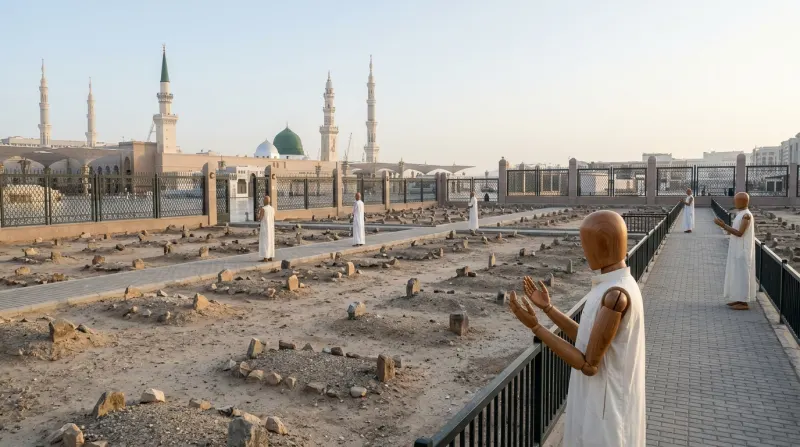
The Messenger of Allah shallallahu ‘alaihi wa sallam was buried in the room of Aisha radhiyallahu ‘anha, where he passed away. Beside him his two closest Companions, Abu Bakr As-Siddiq and Umar bin Al-Khattab radhiyallahu ‘anhuma, were later buried.
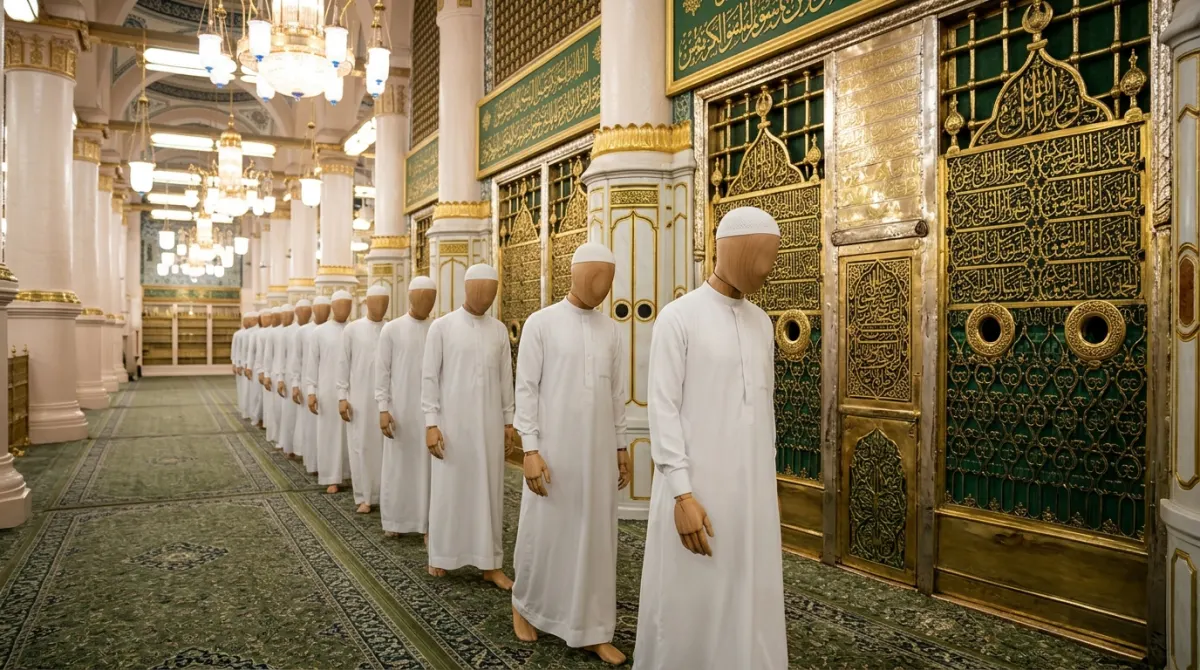
At first this room was outside the mosque. In the time of the Caliph Al-Walid bin Abdul Malik, the mosque was expanded so that the room came within the area of Masjid Nabawi, separated by walls and a grille. Today pilgrims pass it from the qiblah side, to the east of the Raudhah.
2. The Intention of the Journey: To Masjid Nabawi, Not to the Grave
Scholars explain that the journey to Madinah is intended for visiting and praying in Masjid Nabawi. Once there, it is Sunnah to greet the Prophet at his grave. This is based on his saying:
لَا تُشَدُّ الرِّحَالُ إِلَّا إِلَى ثَلَاثَةِ مَسَاجِدَ: الْمَسْجِدِ الْحَرَامِ، وَمَسْجِدِي هَذَا، وَالْمَسْجِدِ الْأَقْصَى
Meaning: “Journeys (for worship) are not to be made except to three mosques: Masjid al-Haram, this mosque of mine, and Masjid al-Aqsa.” (HR. Bukhari no. 1189 and Muslim no. 1397)
A visit to Madinah is also not part of the rites of umrah or hajj, so no ihram or talbiyah is needed. You can read about the virtue of praying in Masjid Nabawi in our article on the Raudhah of Masjid Nabawi.
3. The Words of Salam at the Prophet’s Grave
After praying tahiyyat al-masjid, pilgrims walk toward the Prophet’s grave and greet him in a low voice:
السَّلَامُ عَلَيْكَ أَيُّهَا النَّبِيُّ وَرَحْمَةُ اللهِ وَبَرَكَاتُهُ
Meaning: “Peace be upon you, O Prophet, and the mercy of Allah and His blessings.”
The Permanent Committee mentions that one may add the salawat: “wa sallallahu ‘alaika wa ‘ala alika wa ashabika” (may Allah send blessings upon you, your family, and your Companions).
Then move a little to the right to greet Abu Bakr, and move again to greet Umar. Shaykh Muhammad bin Jamil Zainu mentions the wording:
السَّلَامُ عَلَيْكَ يَا أَبَا بَكْرٍ، السَّلَامُ عَلَيْكَ يَا عُمَرُ
Meaning: “Peace be upon you, O Abu Bakr. Peace be upon you, O Umar.” Then pray that Allah is pleased with them both.
4. Your Salam Reaches the Prophet from Anywhere
Many pilgrims feel they must push through the crowd to get as close to the grave as possible. Yet the Messenger of Allah shallallahu ‘alaihi wa sallam said:
لَا تَجْعَلُوا بُيُوتَكُمْ قُبُورًا، وَلَا تَجْعَلُوا قَبْرِي عِيدًا، وَصَلُّوا عَلَيَّ فَإِنَّ صَلَاتَكُمْ تَبْلُغُنِي حَيْثُ كُنْتُمْ
Meaning: “Do not make your houses like graves, and do not make my grave a place of festivity. Send blessings upon me, for your blessings reach me wherever you are.” (HR. Abu Dawud no. 2042, graded sahih by Shaykh Al-Albani)
He also said that no one greets him with salam except that Allah returns his soul to him so that he may return the greeting (HR. Abu Dawud no. 2041, graded hasan by Shaykh Al-Albani). So there is no need to crowd or hurt others to get near the grave.
5. Etiquette Before the Prophet’s Grave
- Lower your voice. Allah commanded not to raise one’s voice before the Prophet (QS. Al-Hujurat: 2–3), and scholars explain that this etiquette still applies near his grave.
- Give the salam briefly, then keep walking. Ustadz M. Saifudin Hakim reminds pilgrims not to stand too long and block others.
- Make dua facing the qiblah, not the grave. Ustadz Muhammad Abduh Tuasikal and Shaykh Muhammad bin Jamil Zainu emphasize this.
- Keep order and follow the officers who manage the flow of pilgrims.
6. Mistakes to Avoid
- Asking the Prophet for your needs, such as healing, a spouse, or provision. Requests are made to Allah alone.
- Wiping or kissing the grille, walls, and windows of the grave to seek blessing.
- Standing with arms folded as in prayer before the grave.
- Walking around the grave as in tawaf.
- Going back to the grave after every prayer. Shaykh Muhammad bin Jamil Zainu says this was not the practice of the Companions.
- Relying on fabricated hadiths, such as “Whoever performs hajj and does not visit me has shunned me” and “Whoever visits me after my death is as if he visited me in my lifetime”. Shaykh Muhammad bin Jamil Zainu calls both fabricated.
7. What About Women Pilgrims?
Ustadz Muhammad Abduh Tuasikal explains that visiting the Prophet’s grave is specific to men. This is in line with the view of scholars who do not recommend that women visit graves.
Even so, women pilgrims do not lose out on the virtue. As in the hadith above, their salawat and salam still reach the Messenger of Allah from anywhere, including from the women’s rows in Masjid Nabawi or from the hotel. You can also read about women visiting graves in our article on visiting Al-Baqi Cemetery.
Tips for Umrah Pilgrims Greeting the Prophet at His Grave
- Memorize the words of salam before going in, since the time passing in front of the grave is very short.
- Choose a less crowded time, such as after Fajr or between prayer times, and ask your guide about the entry route.
- Do not bring a large bag, since the path in front of the grave is narrow and crowded.
- Put elderly pilgrims first and stay with your group so no one gets separated.
- Send abundant salawat while in Madinah, especially on Fridays.
Frequently Asked Questions About Greeting the Prophet at His Grave
What is the salam at the Prophet’s grave? “Assalamu ‘alaika ayyuhan nabiyyu wa rahmatullahi wa barakatuh.” Then greet Abu Bakr and Umar.
Must you face the grave when making dua? No. Give the salam in front of the grave, then make dua facing the qiblah.
Does salam from afar reach the Prophet? Yes. Salawat and salam reach him wherever we are (HR. Abu Dawud no. 2042).
May you wipe the grille of the grave? No. This is not taught and should be avoided.
Is visiting the Prophet’s grave part of umrah? No. It is Sunnah for those in Madinah, but it is not part of the rites of umrah.
Conclusion: Greeting the Prophet at His Grave According to the Sunnah
Greeting the Messenger of Allah at his grave is a recommended act for those visiting Masjid Nabawi. The words are short, said in a low voice, followed by greetings to Abu Bakr and Umar.
Avoid asking things of him, wiping the grille, walking around the grave, and crowding to the point of hurting others. Remember that our salawat and salam reach him wherever we are.
A Peaceful Madinah Visit with Tridaya
Tridaya Travel has served umrah and hajj pilgrims since 2002. In Madinah, our religious guides accompany pilgrims to greet the Prophet at his grave in an orderly way and in line with the Sunnah.
See the Tridaya umrah packages and plan your worship with our team.
Sources
- Keutamaan Ziarah ke Masjid Nabawi, Ustadz Muhammad Abduh Tuasikal, Rumaysho.com, 29 October 2012 (in Indonesian).
- Adab Ziarah ke Masjid Nabawi agar Sesuai dengan Tuntunan (Bag. 2), Ustadz M. Saifudin Hakim, Muslim.or.id, 1 May 2019 (in Indonesian).
- Adab-adab Masjid Nabawi, Shaykh Muhammad bin Jamil Zainu, Almanhaj.or.id, 13 August 2016 (in Indonesian).
- Kewajiban yang Berihram dan Cara Ziarah ke Masjid Rasulullah, Saudi Ministry of Religious Affairs, Almanhaj.or.id, 2 March 2004 (in Indonesian).
- How Should I Send Salaams upon the Messenger When Visiting His Grave?, Permanent Committee, IslamQA, 15 May 2009.
Share this article
WhatsApp