Visiting Al-Baqi Cemetery in Madinah: The Prophet’s Dua, Etiquette, and May Women Visit?
A guide to visiting Al-Baqi Cemetery in Madinah: the dua taught by the Prophet, etiquette at the graves, what to avoid, and the ruling on women visiting graves.
Issued , by Admin Tridaya. 8 min read.
Contents
- 1. Getting to Know Al-Baqi Cemetery in Madinah
- 2. The Evidence That Visiting Graves Is Prescribed
- 3. The Dua for Visiting Al-Baqi Taught by the Prophet
- 4. Etiquette When Visiting Al-Baqi
- 5. What to Avoid When Visiting Graves
- 6. May Women Visit Al-Baqi?
- Tips for Umrah Pilgrims Visiting Al-Baqi
- Frequently Asked Questions About Visiting Al-Baqi
- Conclusion: Visiting Al-Baqi According to the Sunnah
- A Peaceful Madinah Visit with Tridaya
- Sources
Right on the eastern side of Masjid Nabawi lies the cemetery where thousands of Companions of the Messenger of Allah shallallahu ‘alaihi wa sallam rest. This is Al-Baqi, or in full Baqi Al-Gharqad, which is almost always on the visiting schedule of umrah pilgrims in Madinah.
The Prophet himself often came to this cemetery to pray for those buried there. So which dua did he recite, what is the correct etiquette when visiting, what should be avoided, and may women pilgrims go in?
This article summarizes the explanations of Ustadz Muhammad Abduh Tuasikal at Rumaysho.com, Ustadz Yulian Purnama and a fatwa of Shaykh Ibn Baz at Muslim.or.id, and a fatwa of Shaykh Al-Albani and the book Ahkam Ziyarat Al-Masjid An-Nabawi published at Almanhaj.or.id, complete with evidence and practical tips.
1. Getting to Know Al-Baqi Cemetery in Madinah
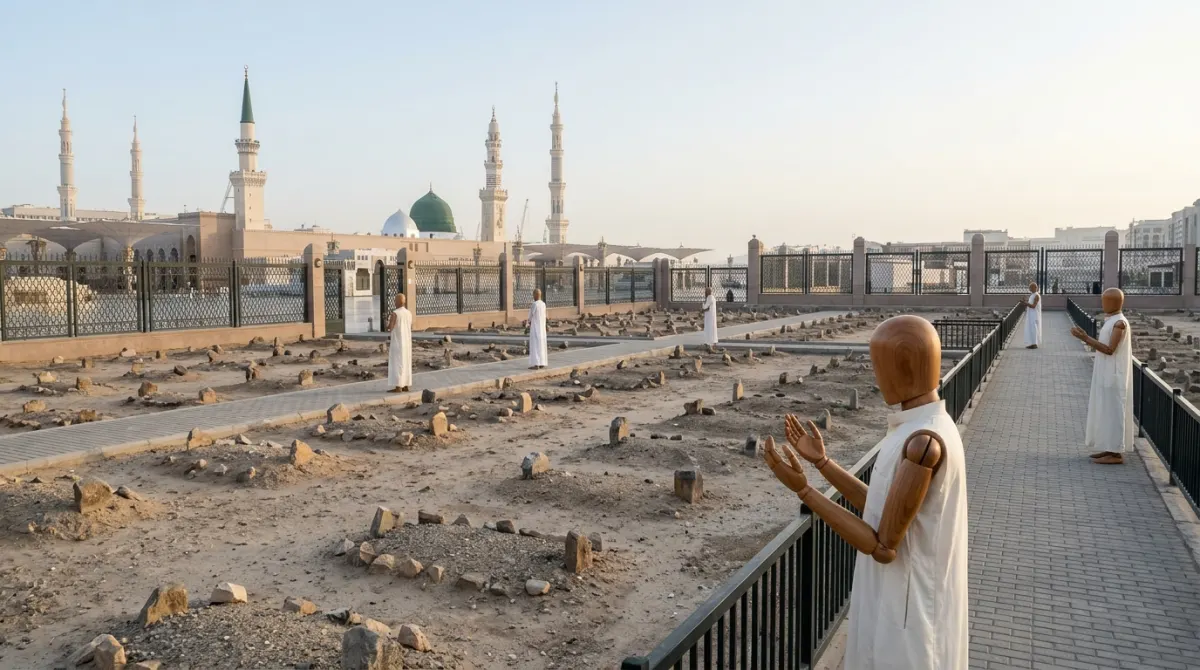
Baqi Al-Gharqad has been the main cemetery of the people of Madinah since the time of the Prophet. Many Companions and members of the Prophet’s family are buried here, among them the Caliph Uthman bin Affan radhiyallahu ‘anhu, several of the Prophet’s wives (the Mothers of the Believers), and his son, Ibrahim.
Today the cemetery is a wide fenced area of simple graves with no structures built over them, in line with the guidance that graves should not be raised or built upon.
2. The Evidence That Visiting Graves Is Prescribed
In the early days of Islam, the Messenger of Allah shallallahu ‘alaihi wa sallam had forbidden visiting graves. Later he permitted it:
كُنْتُ نَهَيْتُكُمْ عَنْ زِيَارَةِ الْقُبُورِ فَزُورُوهَا
Meaning: “I used to forbid you from visiting graves, so (now) visit them.” (HR. Muslim no. 977)
In another narration he explained the wisdom: “Visit the graves, for they remind you of the Hereafter” (HR. Ibn Majah no. 1569). So a visit has two purposes: to remember death and to pray for the Muslims who have passed away, not to seek blessing from the graves.
3. The Dua for Visiting Al-Baqi Taught by the Prophet
Aisha radhiyallahu ‘anha reported that the Messenger of Allah went out at night to Al-Baqi and prayed for those buried there. Jibril came to tell him that Allah had commanded him to pray for the people of Al-Baqi. The dua he recited was:
السَّلَامُ عَلَيْكُمْ دَارَ قَوْمٍ مُؤْمِنِينَ، وَأَتَاكُمْ مَا تُوعَدُونَ غَدًا مُؤَجَّلُونَ، وَإِنَّا إِنْ شَاءَ اللهُ بِكُمْ لَاحِقُونَ، اللَّهُمَّ اغْفِرْ لِأَهْلِ بَقِيعِ الْغَرْقَدِ
Meaning: “Peace be upon you, abode of believing people. What you were promised has come to you, deferred until tomorrow. And we, if Allah wills, will join you. O Allah, forgive the people of Baqi Al-Gharqad.” (HR. Muslim no. 974)
Another dua for visiting graves, which the Prophet taught his Companions and which can be recited at any cemetery, is:
السَّلَامُ عَلَيْكُمْ أَهْلَ الدِّيَارِ مِنَ الْمُؤْمِنِينَ وَالْمُسْلِمِينَ، وَإِنَّا إِنْ شَاءَ اللهُ لَلَاحِقُونَ، أَسْأَلُ اللهَ لَنَا وَلَكُمُ الْعَافِيَةَ
Meaning: “Peace be upon you, people of the dwellings, among the believers and the Muslims. We, if Allah wills, will join you. I ask Allah for well-being for us and for you.” (HR. Muslim no. 975, from Buraidah radhiyallahu ‘anhu)
After the greeting, you may pray for forgiveness and mercy for the Companions and all Muslims in any language. Aisha also reported that the Prophet stood for a long time at Al-Baqi, raising both hands as he prayed.
4. Etiquette When Visiting Al-Baqi
- Give the greeting and pray for those buried there, as the Prophet did.
- Face the qiblah when making dua, not the graves. Ustadz Yananto Sulaimansyah at Muslim.or.id reports that the Prophet raised his hands in dua at Al-Baqi without facing the graves.
- Guard your words and voice. Remember death and reflect on yourself.
- Do not sit on graves. The Prophet said, “Do not sit on graves and do not pray facing them” (HR. Muslim no. 972).
- Remove your footwear when walking between graves, based on the hadith of Bashir bin Al-Khasasiyah, in which the Prophet told a man walking between the graves in sandals to take them off (HR. Abu Dawud no. 3230).
Visiting the graves of the Prophet’s family often reminds pilgrims of their own parents who have passed away. You can read how to dedicate worship to them in our article on performing umrah on behalf of the deceased.
5. What to Avoid When Visiting Graves
Shaykh Abdul Aziz bin Baz, in a fatwa translated by Ustadz M. Saifudin Hakim at Muslim.or.id, explains that a visit in line with the Sunnah is for praying for the dead, not for asking things of them. Some things to avoid:
- Asking the dead for your needs, making vows to them, or seeking their help. This is an act of shirk.
- Wiping or kissing the graves or their fences to seek blessing. This is not part of the Sunnah.
- Reciting Al-Fatihah or particular verses specifically at the graves. Shaykh Ibn Baz said there is no example of this from the Prophet.
- Taking soil or pebbles from the cemetery to bring home as an amulet or souvenir.
6. May Women Visit Al-Baqi?
Scholars differ on whether women may visit graves:
- Permissible, as long as it is not frequent and free from prohibited acts. Shaykh Al-Albani cited the hadith of Aisha, who asked the Prophet what to say when visiting Al-Baqi, and he taught her. Ustadz Yulian Purnama at Muslim.or.id favors this view.
- Not recommended or forbidden. Shaykh Ibn Baz and Shaykh Muhammad bin Ibrahim cited the hadith “Allah has cursed women who frequently visit graves” (HR. At-Tirmidhi no. 1056), out of concern for wailing and temptation.
Ibn Hajar in Fath Al-Bari explains that the word zawwarat in that hadith refers to women who visit graves often or constantly. So many scholars hold that an occasional visit does not fall under that warning.
In practice in Madinah, the inner area of Al-Baqi is generally open only to men. Women pilgrims usually give the greeting and make dua from outside the fence, and their prayers still reach those buried there.
Tips for Umrah Pilgrims Visiting Al-Baqi
- Go after Fajr or Asr at Masjid Nabawi, since the gates of Al-Baqi are usually open to visitors at those times. Confirm the schedule with your guide.
- Memorize the dua for visiting graves before you go, or keep the text on your phone.
- Wear footwear that is easy to remove and bring a bag to keep it in.
- Follow the officers’ directions and do not argue with them in the cemetery.
- Stay with your group, and agree on a meeting point with the women pilgrims waiting outside.
Besides Al-Baqi, a place recommended to visit while in Madinah is Masjid Quba. You can read about it in our article on praying at Masjid Quba.
Frequently Asked Questions About Visiting Al-Baqi
Who is buried in Al-Baqi? Thousands of Companions and members of the Prophet’s family, among them Uthman bin Affan, some of the Prophet’s wives, and his son, Ibrahim.
Which dua is recited when visiting Al-Baqi? The dua the Prophet recited: “Assalamu ‘alaikum dara qaumin mu’minin... Allahummaghfir li ahli Baqi’il Gharqad” (HR. Muslim no. 974).
May you recite Al-Fatihah at the graves? According to Shaykh Ibn Baz, there is no basis for it. What was taught is the greeting and dua.
May women enter Al-Baqi? Scholars differ on women visiting graves. In practice, women pilgrims usually make dua from outside the fence.
Is visiting Al-Baqi part of umrah? No. It is sunnah for those in Madinah, but it is not a pillar or an obligatory part of umrah.
Conclusion: Visiting Al-Baqi According to the Sunnah
Baqi Al-Gharqad is the cemetery of the Companions that is recommended to visit while in Madinah. Its purpose is to remember death and to pray for those buried there with the dua taught by the Messenger of Allah.
Avoid asking things of the dead, wiping the graves, and sitting on them. For women, scholars differ, and in practice they make dua from outside the fence.
A Peaceful Madinah Visit with Tridaya
Tridaya Travel has served umrah and hajj pilgrims since 2002. In Madinah, our religious guides accompany pilgrims on visits in line with the Sunnah, including leading the dua for visiting graves and arranging group meeting points.
See the Tridaya umrah packages and plan your worship with our team.
Sources
- Doa Ziarah Kubur dan Faedahnya, Ustadz Muhammad Abduh Tuasikal, Rumaysho.com, 13 October 2016 (in Indonesian).
- Adab Islami Ziarah Kubur, Ustadz Yananto Sulaimansyah, Muslim.or.id, 20 December 2011 (in Indonesian).
- Keutamaan Ziarah Kubur, Ustadz Yulian Purnama, Muslim.or.id, 12 March 2012 (in Indonesian).
- Fatwa Ulama: Ziarah Kubur, antara Sunnah dan Bid’ah, Shaykh Abdul Aziz bin Baz, translated by Ustadz M. Saifudin Hakim, Muslim.or.id, 6 November 2017 (in Indonesian).
- Hukum Ziarahnya Wanita ke Kubur, Shaykh Al-Albani and Shaykh Muhammad bin Ibrahim, Almanhaj.or.id, 9 June 2004 (in Indonesian).
- Hukum-Hukum Ziarah ke Masjid Nabawi, Yusuf bin Abdullah Al-Ahmad, Almanhaj.or.id, 5 July 2021 (in Indonesian).
Share this article
WhatsApp