Visiting Mount Uhud: The Battle of Uhud, the Martyrs’ Graves, and the Etiquette Pilgrims Should Know
A guide to visiting Mount Uhud: the story of the Battle of Uhud, the graves of Hamzah and the martyrs, the dua for visiting, and the etiquette pilgrims should know.
Issued , by Admin Tridaya. 7 min read.
Contents
- 1. A Brief Story of the Battle of Uhud
- 2. The Great Lessons of the Battle of Uhud
- 3. The Martyrdom of Hamzah and the 70 Martyrs of Uhud
- 4. The Virtue of Mount Uhud
- 5. The Ruling on Visiting the Graves of the Martyrs of Uhud
- 6. Things to Avoid at Mount Uhud
- Tips for Umrah Pilgrims Visiting Mount Uhud
- Frequently Asked Questions About Visiting Mount Uhud
- Conclusion: A Visit to Mount Uhud Full of Lessons
- A Meaningful Madinah Visit with Tridaya
- Sources
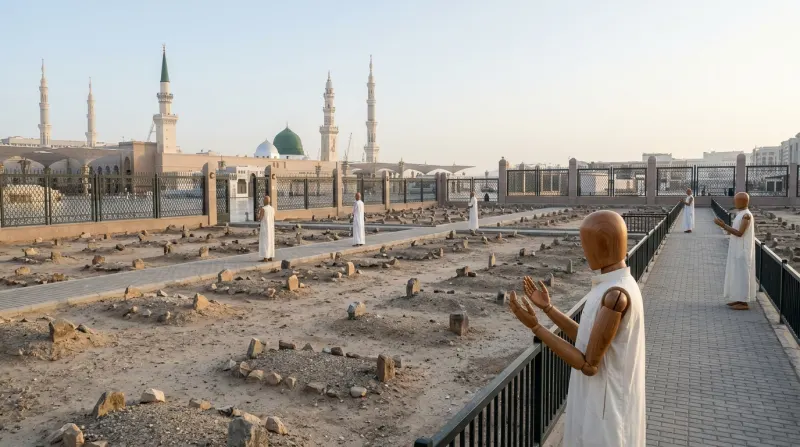
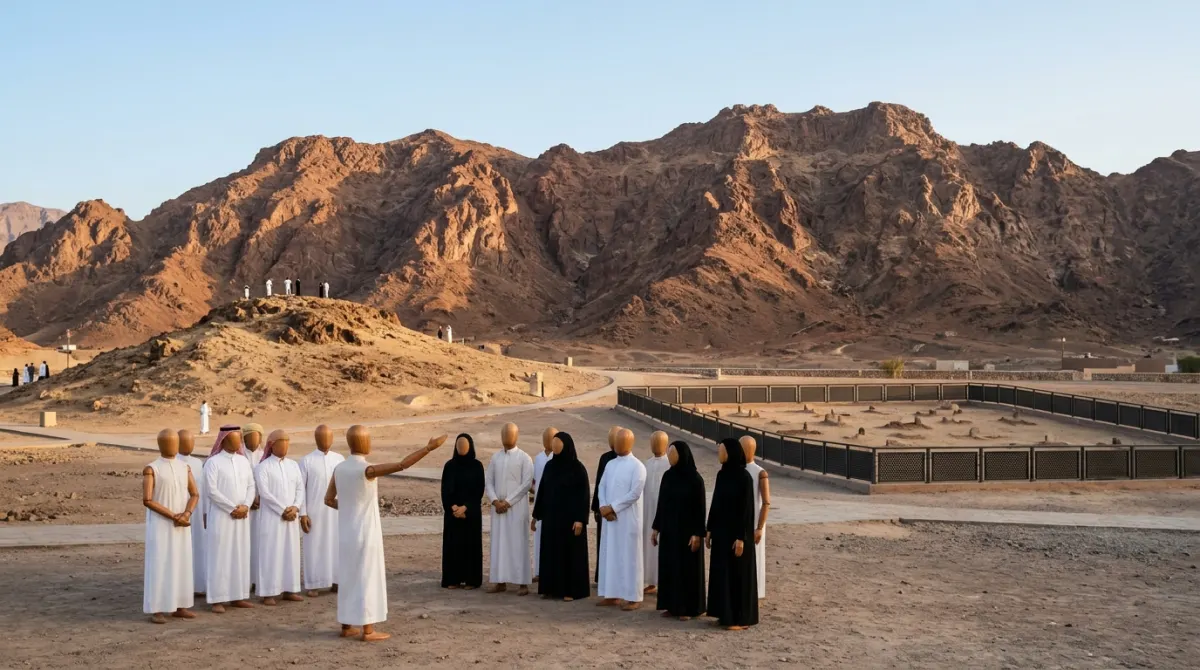
About 5 kilometers north of Masjid Nabawi stands a reddish mountain that holds one of the most moving stories in Islamic history. This is Mount Uhud, site of the Battle of Uhud and resting place of 70 Companions who fell as martyrs.
Almost every umrah group visits this place while in Madinah. But so that the visit is more than sightseeing, pilgrims should know its story, the lessons behind it, the dua recited at the martyrs’ graves, and the etiquette and things to avoid.
This article summarizes the explanations of Ustadz Muhammad Abduh Tuasikal at Rumaysho.com, a work by Shaykh Abdul Muhsin Al-Abbad published at Almanhaj.or.id, and a fatwa of Shaykh Muhammad bin Salih Al-Uthaymin, complete with evidence and practical tips.
1. A Brief Story of the Battle of Uhud
The Battle of Uhud took place on a Saturday in the month of Shawwal in the third year of the Hijrah. The Quraysh came with 3,000 troops and 200 horses to avenge their defeat at Badr.
The Messenger of Allah shallallahu ‘alaihi wa sallam set out with about 1,000 Companions. On the way, Abdullah bin Ubayy, a leader of the hypocrites, withdrew 300 men, leaving the Muslims with about 700.
The Prophet placed 50 archers under the command of Abdullah bin Jubair radhiyallahu ‘anhu on a small hill, now known as Jabal Rumat. He ordered them not to leave their post, even if they saw the Muslim army being snatched away by birds.
2. The Great Lessons of the Battle of Uhud
At first the Muslims had the upper hand. But when most of the archers saw the enemy retreating and the spoils left behind, they came down from the hill. The Quraysh cavalry then circled around and attacked from behind, and the Muslims were pushed back.
Allah Ta’ala describes this event in Surah Ali Imran:
وَلَقَدْ صَدَقَكُمُ اللَّهُ وَعْدَهُ إِذْ تَحُسُّونَهُمْ بِإِذْنِهِ حَتَّى إِذَا فَشِلْتُمْ وَتَنَازَعْتُمْ فِي الْأَمْرِ وَعَصَيْتُمْ مِنْ بَعْدِ مَا أَرَاكُمْ مَا تُحِبُّونَ مِنْكُمْ مَنْ يُرِيدُ الدُّنْيَا وَمِنْكُمْ مَنْ يُرِيدُ الْآخِرَةَ
Meaning: “And Allah had certainly fulfilled His promise to you when you were killing them by His permission, until you lost courage, disputed about the order, and disobeyed after He had shown you what you love. Among you are some who desire this world, and among you are some who desire the Hereafter.” (QS. Ali Imran: 152)
Ustadz Muhammad Abduh Tuasikal at Rumaysho.com explains that the greatest lesson of Uhud is the importance of obeying Allah and His Messenger, and the danger of love of this world, which can turn victory into calamity.
3. The Martyrdom of Hamzah and the 70 Martyrs of Uhud
At least 70 Companions fell as martyrs in this battle. Among them were the Prophet’s uncle, Hamzah bin Abdul Muttalib radhiyallahu ‘anhu, who was killed by the spear of Wahshi, and Mus’ab bin Umair radhiyallahu ‘anhu, the standard-bearer of the Muslims.
The Prophet himself was wounded in this battle. The martyrs were buried near the battlefield, some of them two to a grave because of the number of the fallen (HR. Bukhari no. 4079).
Allah honored the martyrs in His words:
وَلَا تَحْسَبَنَّ الَّذِينَ قُتِلُوا فِي سَبِيلِ اللَّهِ أَمْوَاتًا بَلْ أَحْيَاءٌ عِنْدَ رَبِّهِمْ يُرْزَقُونَ
Meaning: “Never think of those who have been killed in the way of Allah as dead. Rather, they are alive with their Lord, receiving provision.” (QS. Ali Imran: 169)
4. The Virtue of Mount Uhud
The Messenger of Allah shallallahu ‘alaihi wa sallam had a special love for this mountain. When he saw it on returning from a journey, he said:
هَذَا جَبَلٌ يُحِبُّنَا وَنُحِبُّهُ
Meaning: “This is a mountain that loves us and we love it.” (HR. Bukhari and Muslim)
This hadith shows the special status of the mountain. However, it does not mean that its soil, stones, or any part of it may be used as a means of seeking blessing.
5. The Ruling on Visiting the Graves of the Martyrs of Uhud
Shaykh Abdul Muhsin Al-Abbad, in a work published at Almanhaj.or.id, explains that there are two cemeteries in Madinah that are recommended to visit: Al-Baqi and the cemetery of the martyrs of Uhud. Shaykh Muhammad bin Salih Al-Uthaymin also states that it is Sunnah to go out to Uhud and visit the graves of the martyrs, including Hamzah bin Abdul Muttalib.
The Prophet himself went to the martyrs of Uhud and prayed for them eight years after the battle, like someone bidding farewell to the living and the dead (HR. Bukhari no. 4042).
The dua recited during the visit is the same as the general dua for visiting graves:
السَّلَامُ عَلَيْكُمْ أَهْلَ الدِّيَارِ مِنَ الْمُؤْمِنِينَ وَالْمُسْلِمِينَ، وَإِنَّا إِنْ شَاءَ اللهُ لَلَاحِقُونَ، أَسْأَلُ اللهَ لَنَا وَلَكُمُ الْعَافِيَةَ
Meaning: “Peace be upon you, people of the dwellings, among the believers and the Muslims. We, if Allah wills, will join you. I ask Allah for well-being for us and for you.” (HR. Muslim no. 975)
You can read the full etiquette of visiting graves in Madinah in our article on visiting Al-Baqi Cemetery.
6. Things to Avoid at Mount Uhud
- Asking the martyrs for things, such as healing or provision. What is prescribed is to pray for them, not to ask of them.
- Wiping the cemetery fence or throwing money and objects into the cemetery to seek blessing.
- Taking stones or soil from Mount Uhud or Jabal Rumat to take home as an amulet.
- Praying in the cemetery area or facing the graves when making dua. Make dua facing the qiblah.
- Believing in special acts of worship at other places around Uhud. Shaykh Al-Uthaymin explains that going to places in Madinah other than those taught, with the intention of worship, has no basis.
Climbing Jabal Rumat to see the battlefield and take lessons from history is fine, as long as it is not accompanied by beliefs or practices that are not taught.
Tips for Umrah Pilgrims Visiting Mount Uhud
- Read the story of the Battle of Uhud before you go, so the visit is more meaningful and full of lessons.
- Come in the morning, when the Madinah air is still cool and the area is less crowded.
- Wear comfortable footwear if you want to climb Jabal Rumat, as the surface is rocky and fairly slippery.
- Bring drinking water and head protection, especially in summer.
- Be wary of sellers offering goods with claims that they carry blessings from Uhud.
- Mind the meeting time so you are not left behind when the group returns to the bus.
A Madinah visit usually also includes Masjid Quba. You can read about its virtue in our article on praying at Masjid Quba.
Frequently Asked Questions About Visiting Mount Uhud
When did the Battle of Uhud take place? In Shawwal in the third year of the Hijrah, about a year after the Battle of Badr.
Who is buried at Uhud? About 70 Companions who fell in the battle, among them Hamzah bin Abdul Muttalib and Mus’ab bin Umair.
Is visiting the graves of the martyrs of Uhud recommended? Yes. Scholars call it Sunnah for those in Madinah, following the Prophet, who prayed for them.
Which dua is recited at the martyrs’ graves? The dua for visiting graves taught by the Prophet, followed by prayers for their forgiveness and mercy.
May you take stones from Mount Uhud? It is not recommended, especially if believed to bring blessing. The mountain’s special status does not make its stones amulets.
Conclusion: A Visit to Mount Uhud Full of Lessons
Mount Uhud is a witness to the struggle of the Prophet and his Companions, and the resting place of 70 martyrs, including Hamzah bin Abdul Muttalib. Visiting their graves is Sunnah, by giving the greeting and praying for them.
Take lessons from its story, especially about obedience and the danger of love of this world. Avoid asking things of the martyrs, wiping the graves, and taking stones to seek blessing.
A Meaningful Madinah Visit with Tridaya
Tridaya Travel has served umrah and hajj pilgrims since 2002. During the visit to Mount Uhud, our religious guides tell the story of the battle on site and guide pilgrims to visit in line with the Sunnah.
See the Tridaya umrah packages and plan your worship with our team.
Sources
- Faedah Sirah Nabi: Perang Uhud dan Pelajaran di Dalamnya, Ustadz Muhammad Abduh Tuasikal, Rumaysho.com, 12 May 2023 (in Indonesian).
- Tadabbur Perang Uhud dalam Surah Ali Imran, Ustadz Muhammad Abduh Tuasikal, Rumaysho.com, 21 February 2026 (in Indonesian).
- Adab Penduduk Kota Madinah dan Orang yang Berziarah, Shaykh Abdul Muhsin Al-Abbad, Almanhaj.or.id, 27 October 2015 (in Indonesian).
- Visiting Martyrs’ Graves, Shaykh Muhammad bin Salih Al-Uthaymin, IslamQA, 15 January 2003.
Share this article
WhatsApp